 nonoha Hub
Features of nonoha
nonoha is a node-based framework for signal processing and applications, made for real-time signal processing in Python. Developers build signal-processing graphs together with AI, and the whole application for their end users around them.
Pure Python and NumPy
nonoha processes signals in real time with pure Python and NumPy, without intricate acceleration tricks or dependencies in other languages.
Writing nodes and pluginsfrom scipy.signal import welch def _on_input(self, values): # A plain NumPy array, no wrapper _, power = welch(values[0], fs=self.fs) self._output.dispatch([power])
A lightweight core
nonoha-core, the core nonoha is built on, is designed to process signals lightly and fast, with an optimized hot path. It depends only on NumPy: a small layer that plugins and other extensions build on to add features.
Real-time signal processing
NumPy is fast at vector operations over whole arrays. nonoha processes signals in batches, one NumPy operation per batch, and keeps up in real time.
A node-based editor that runs in your browser
In the standard browser that most platforms come with, place nodes, set their properties, and watch the signals flowing through the graph in live plots.
Concepts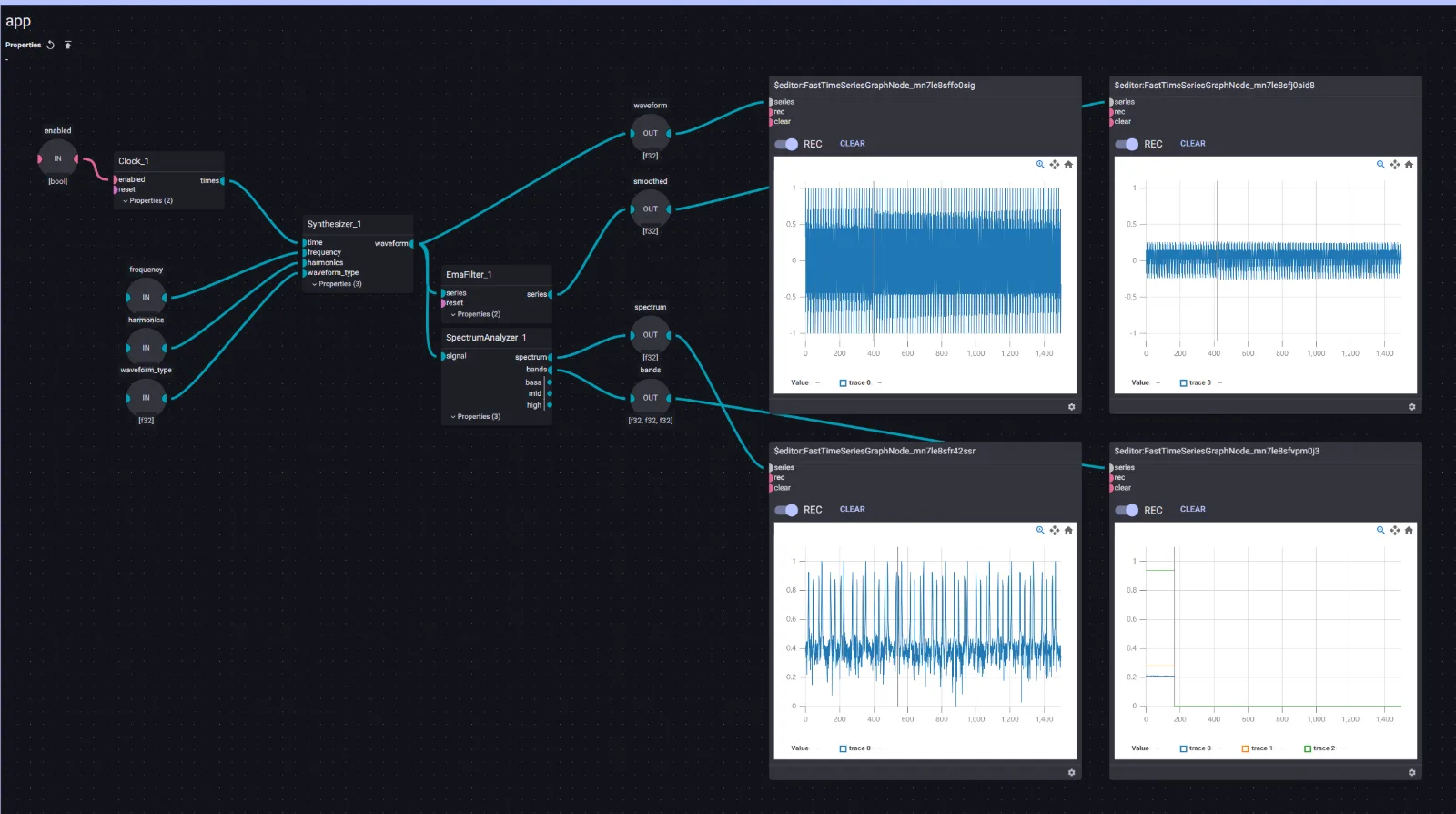
Your own web UI
Besides nonoha editor for editing and monitoring graphs, you can build a custom UI made for each workspace. It is web-based, so the libraries of the web ecosystem (WebGL, Web Audio, and more) let you build full-featured apps. nonoha engine hosts the UI you build, with no extra UI framework needed.
Your own web UI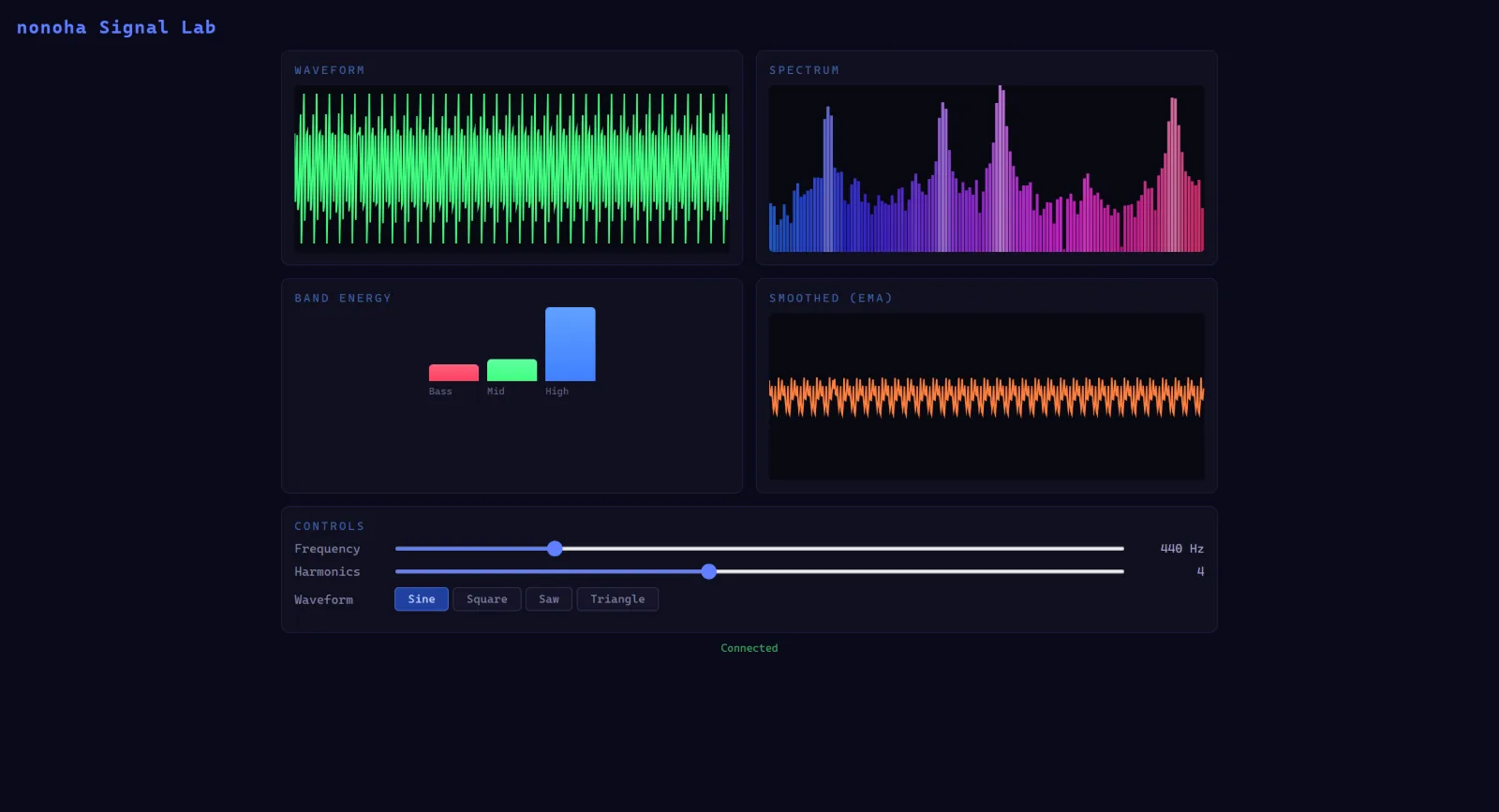
Remote control over REST and WebSocket
The engine is an API server. Run it on one machine, and edit and monitor its graphs from a browser or your own app on another, over REST and WebSocket.
Built by people and AI together
People see and check in the GUI; AI coding agents read and write code. Both work on the same workspace, and Build with AI in nonoha Hub hands it to your agent.
From desktop to device
nonoha is designed to run across a wide range of environments, from desktops to mobile and embedded devices such as the Raspberry Pi. A workspace built on the desktop runs as it is on mobile and embedded devices, as long as its plugins support the platform. On desktops and embedded devices nonoha engine runs it directly; inside apps, on mobile or on a server, nonoha embedded does.